

Why Guys Leave Public Cam Rooms for Private Chat in 2026
You can feel the drop-off happen.
It’s right there in the room.
The public cam is busy. Comments move fast. Tips pop. The energy looks good from the outside. For a few minutes, it even feels good from the inside.
Then something changes.
The crowd stops feeling exciting and starts feeling loud.
That’s the pivot more users make in 2026. They don’t leave public cam rooms because public rooms are broken. They leave because noise has a shelf life. At a certain point, attention starts to matter more than atmosphere.
The Public Room Hook Is Real
Let’s be fair to public rooms first.
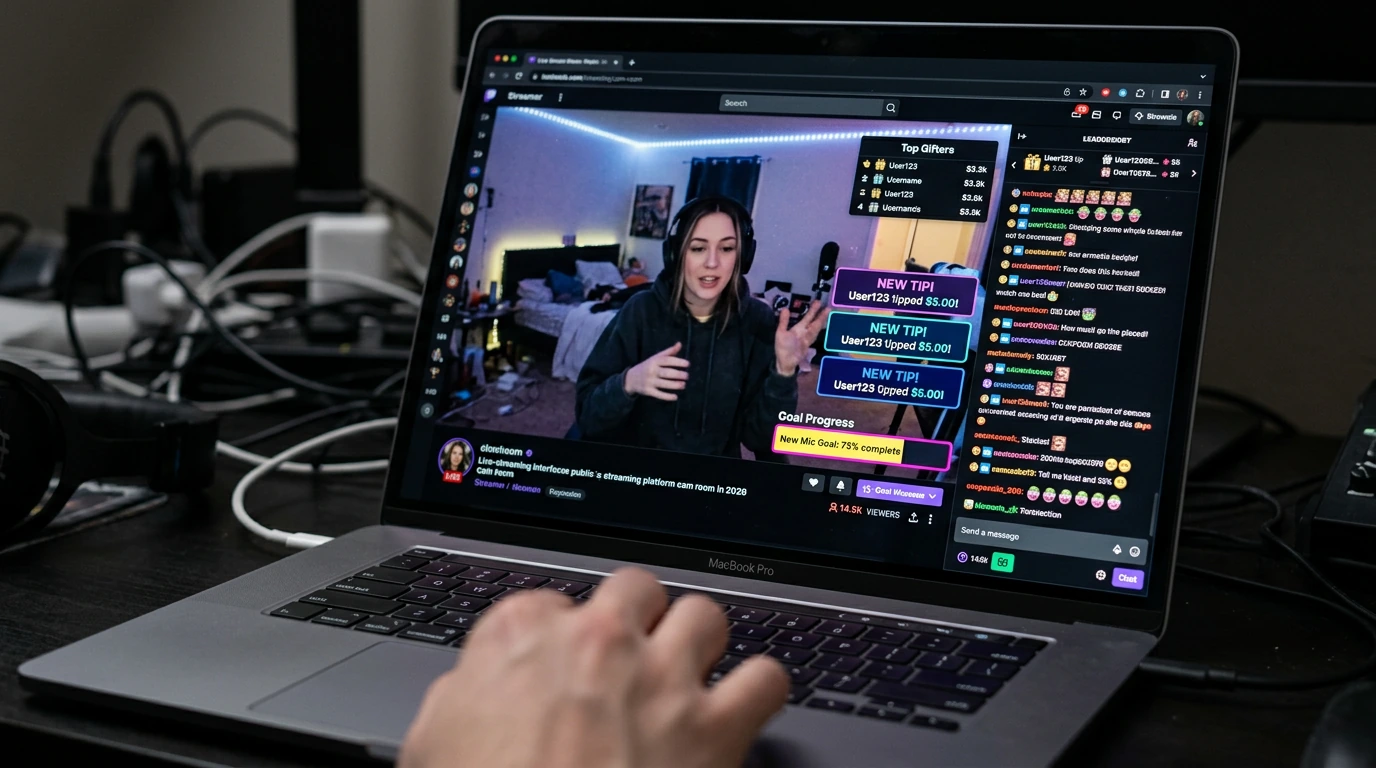
They work because they give you scale instantly. You arrive and the room already has heat. Somebody is talking. Somebody is tipping. Something is moving. The performer is active, the chat is alive, and nobody has to explain what kind of site this is.
That is powerful.
It’s one reason people still drift toward fast-entry experiences across the adult chat world, especially if they already like open-ended formats like roulette-style cam2cam platforms. A live room with existing momentum saves you from the blank-screen feeling. You’re entering a scene, not starting one.
But “Live” Is Not the Same as “Personal”
That’s where the split begins.
A public room can be highly active and still feel emotionally thin. You are watching attention happen. You are not always receiving it.
And the longer someone stays in that environment, the more obvious the gap becomes. The performance is shared. The pace is shared. The flirt energy is shared too. That can be fun. It can also flatten the whole thing.
Even the way the term is framed matters. Merriam-Webster defines a camgirl as someone posing for a webcam as paid adult entertainment. That definition is simple, but it points to the truth: performance comes first. Intimacy is optional. In public rooms, it’s often diluted by design.
The Private Switch Usually Happens Quietly
Nobody announces it.
The user just shifts.
Less scrolling. Less observing. More interest in whether someone is actually responding back. Not to everyone. To them.
This is why private chat keeps pulling people out of public rooms. Not because private always looks better. Sometimes it doesn’t. Not because it’s cheaper. Usually it isn’t. It pulls because the emotional geometry changes the second the crowd drops away.
Now the interaction has weight.
Now pauses matter. Tone matters. Timing matters.
Why One-on-One Feels Bigger Than It Looks
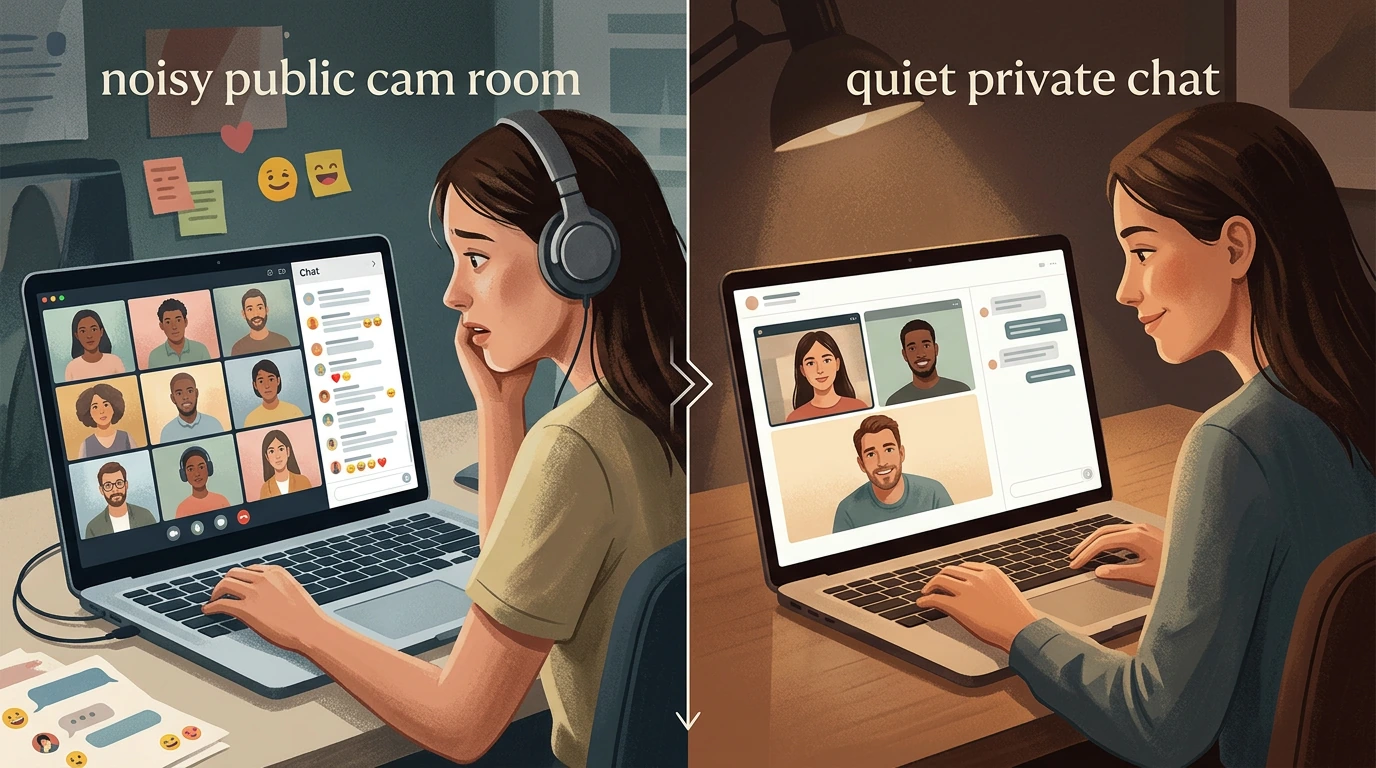
The strange thing about private chat is that, visually, it can look smaller than a public room. Fewer comments. Less motion. Less spectacle.
But the user often feels more inside the experience.
That part has been understood inside the industry for years. In VICE’s reporting on cam economics, one point comes up again and again: private sessions drive the real sense of intimacy, even when the surface product looks simpler than a packed room. People are not just paying for explicitness. They’re paying for directed attention.
That matters a lot more than many first-time users expect.
Why Some Users Still Stay in Public Rooms
Because sometimes the crowd is the point.
Sometimes you want spectacle, not focus.
You want movement. Competition. A little chaos. The room itself is doing half the work. There’s nothing wrong with that. In fact, for users who like quick variety and don’t want emotional pressure, public rooms can be the cleaner format.
That same appetite shows up outside classic cam sites too. You see it in looser, faster ecosystems and in guides built around energy-first experiences, like fast adult chat formats that rely on live momentum rather than depth.
Some users aren’t leaving public rooms because the rooms are weak.
They’re leaving because their mood changed mid-session.
So Why Do Guys Leave?
Usually for one of three reasons.
- They stop wanting to watch and start wanting to participate.
- They get tired of sharing the moment with a room full of other people.
- They realize that stimulation and attention are not interchangeable.
That last one is the big one.
Public rooms stimulate. Private chat concentrates.
Once somebody feels that difference clearly, it becomes hard to unfeel.
Last Thing
People talk about public rooms and private chat as if one replaces the other.
That’s too simple.
Public rooms are the spark. Private chat is the zoom.
One gets you into the mood. The other tells you whether the mood had any real center to it.
That’s why users keep leaving one for the other, then sometimes drifting back again. They aren’t being inconsistent. They’re just following a very old pattern online: first the crowd, then the person, then the choice between staying broad or going deeper.


