
Omegle Is Coming Back in 2026: What the New Teaser Really Tells Us
If you thought Omegle was dead for good, the homepage says otherwise.
Right now, Omegle.com is no longer just a shutdown memorial. It has a live teaser page saying the platform is launching soon, with a new pitch built around a verified community, protected conversations, and round-the-clock moderation.
That doesn’t mean the original Omegle is fully back online yet. But it does mean something a lot of people didn’t expect in 2026: the brand is moving again.
And if you’ve been following the random chat space through OmeTok, you already know this could shake up more than nostalgia. It could affect traffic, user expectations, platform positioning, and the entire post-Omegle market.
Omegle Is Teasing a Return in 2026

The biggest headline is simple: Omegle is signaling a comeback.
The current homepage says the platform is “launching soon,” which is a very different message from the shutdown tone people associated with the brand after 2023. That alone is enough to put Omegle back into the conversation.
For a lot of users, Omegle never really left the culture. It stayed in search behavior, TikTok references, reaction content, and in the way people still describe random video chat. Even after the site went offline, users kept searching for replacements, clones, and better versions of the same experience.
Now the original domain is active again with a teaser, and that changes the mood instantly.
Why This Is Bigger Than Just Another Omegle Clone
The web has been full of “new Omegle” claims since the shutdown. Most of them were just traffic grabs.
That’s what makes this different. This isn’t some lookalike domain trying to capture leftover search volume. This is the actual Omegle.com domain putting a new message in front of the public.
That matters because brand memory still counts for a lot in this niche. People may say they’ve moved on, but the Omegle name still carries way more weight than most newer random chat platforms. Even users who now prefer newer options still use Omegle as the reference point.
In other words, this isn’t just a relaunch rumor. It’s a signal that the original brand may be preparing a second act.
What the New Homepage Already Tells Us
Even though the product isn’t open yet, the teaser says a lot about the direction.
This Looks More Controlled Than the Old Omegle
The old Omegle was built on speed, chaos, anonymity, and almost zero friction. You clicked, landed in a chat, and dealt with whatever came next. That rawness was part of the appeal, but it was also part of what eventually broke the model.
The new messaging feels completely different.
Instead of leaning into randomness alone, the teaser leans into trust signals. It talks about a verified community, protected conversations, and 24/7 monitoring. That sounds less like the original wildcard version of Omegle and more like a platform trying to relaunch with cleaner positioning.
The Brand Is Being Reintroduced, Not Just Reopened
This doesn’t feel like somebody flipped the old servers back on.
It feels like a deliberate reintroduction of the Omegle name to a market that looks very different from the one it left behind. Since the shutdown, users have spread across browser-first chat sites, mobile-first alternatives, adult social discovery funnels, and cam-style platforms that built businesses around the same curiosity loop.
If you’ve been comparing Omegle alternatives over the last two years, you’ve probably noticed that the market already split into several sub-niches. Some users want fast anonymous chat. Others want better matching. Others want adult energy, fewer bots, or more women online.
That means Omegle isn’t coming back into an empty room. It’s coming back into a crowded market that learned how to monetize the gap it left behind.
Old Omegle vs the Teased 2026 Version
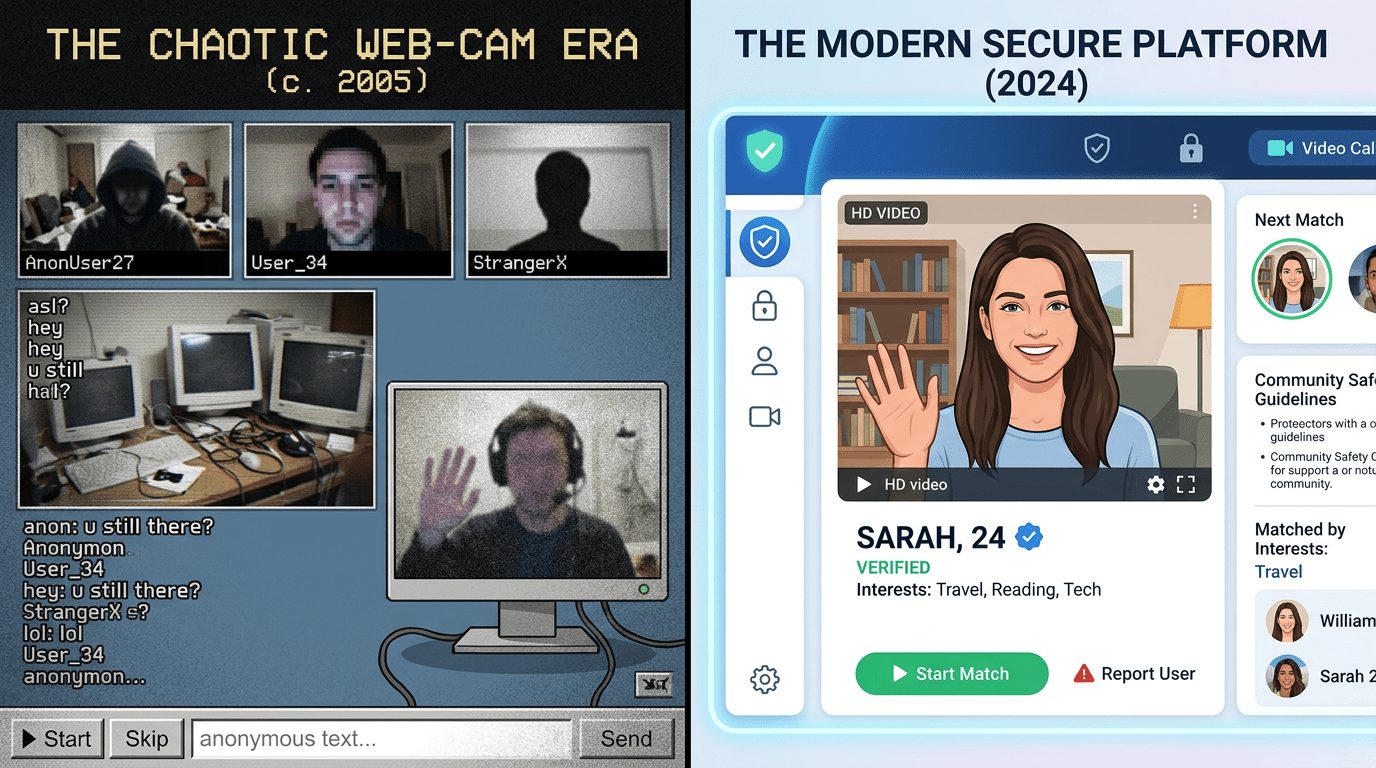
The teaser is still light on details, but the branding already suggests a clear shift.
| Version | Main Vibe | Onboarding Style | Moderation Signal | Best Fit |
|---|---|---|---|---|
| Old Omegle | Raw, anonymous, unpredictable | Instant and almost frictionless | Light-touch and inconsistent | Users chasing pure randomness |
| Teased Omegle 2026 | Cleaner, more polished, more controlled | Likely still simple, but with more checks | Strong emphasis in the teaser copy | Mainstream users who want the brand back |
| Current alternatives | Fragmented by niche and intent | Varies by site | Ranges from weak to premium | Users who already moved on post-shutdown |
That middle row is the interesting part.
If Omegle really does return with stronger verification and moderation signals, it won’t just be “old Omegle again.” It’ll be a repositioned version of the brand.
What This Means for the Adult Random Chat Niche
This is where things get especially interesting.
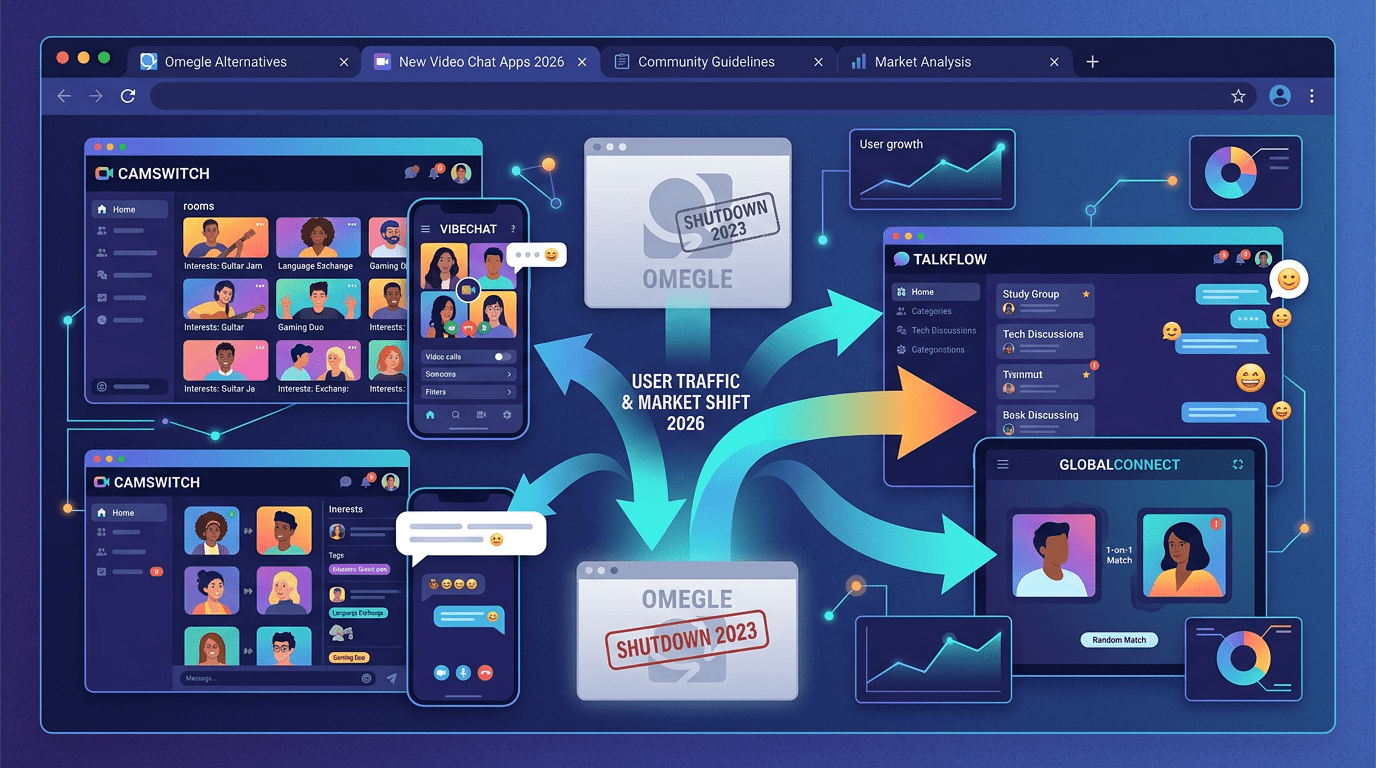
After Omegle shut down in 2023, a lot of user intent didn’t disappear. It just got redistributed. Some users went to general random chat apps. Some went to mobile-first platforms. A huge share moved into adult-adjacent or openly adult spaces, especially where the promise was clearer: more real people, stronger gender targeting, faster chemistry, and less dead-end matching.
That’s why so much of today’s search behavior sits closer to cam discovery and adult social browsing than to the original “clean” Omegle idea.
If the 2026 version of Omegle comes back with a more polished mainstream identity, it may not directly replace that adult segment. It might sit higher in the funnel instead. People could use it as the recognizable entry point, then still branch into more niche experiences depending on what they actually want.
That includes the kind of audience reading posts like dirty conversations on random chat sites or looking for a more blunt, adult-facing breakdown of what current cam-style platforms really offer.
Will the New Omegle Still Feel Like Omegle?
That’s the real question.
Because the old Omegle wasn’t just a website. It was a feeling. It was low-friction, weird, funny, awkward, unpredictable, and occasionally addictive. You didn’t go there for polished UX. You went there because anything could happen in the next click.
The comeback teaser suggests a product that wants to keep the human connection angle while reducing the mess that made the old version so controversial.
That sounds smart from a business point of view. But it also creates a tension.
If the new Omegle becomes too managed, too filtered, or too sanitized, some of the original audience may see it as a different product wearing the same name. On the other hand, if it launches too close to the old formula, it risks repeating the same problems that helped end the first era.
That balance will decide whether this comeback feels real or just symbolic.
What Users Are Probably Going to Expect

The average user coming back to Omegle in 2026 probably expects one of three things.
- The exact old experience, just reopened
- A modernized random video chat product with better quality control
- A faster path to the kind of one-on-one chemistry they now find on adult-focused alternatives
Those expectations are not the same thing.
And that’s why the relaunch could create both hype and disappointment at the same time. The name pulls in several audiences now, not just one. Teen nostalgia is gone. Mainstream random chat users are older. Adult traffic is more commercially valuable. Mobile behavior is stronger than ever, especially for users who now browse video chat sites that work on mobile before they ever touch desktop.
So the new Omegle doesn’t just have to launch. It has to define which audience it actually wants back.
Common Mistakes People Make When They Hear “Omegle Is Back”
There are already a few bad assumptions floating around.
Mistake #1: Thinking the Site Is Fully Live Again
It isn’t. The teaser is live. That’s not the same thing as a full public relaunch.
Mistake #2: Assuming the Comeback Means “Old Omegle” Returns Unchanged
The homepage language suggests the opposite. This looks like a more structured version of the brand.
Mistake #3: Underestimating How Much the Market Changed
Omegle is returning to a space where users already built new habits. Since 2023, people have learned how to navigate a broader mix of alternatives, including more adult-facing options and more specialized platforms.
Mistake #4: Forgetting That User Intent Is More Segmented Now
Some users want random conversation. Some want flirting. Some want cam energy. Some want instant attention. Those groups used to overlap more under the Omegle umbrella. Today they’re split across different product types.
Mistake #5: Believing the Name Alone Guarantees Dominance
The brand is still massive. But brand memory alone won’t win if the actual product feels slow, overbuilt, or disconnected from what random chat users want now.
How the Comeback Could Affect Omegle Alternatives
Even before the product launches, the teaser alone can influence user behavior.
Some people will wait. Some will get curious and start comparing today’s options again. Some will bounce between new platforms and try to guess which one still feels most like classic Omegle.
That’s where competitor articles and comparison content become more important, not less. If you’ve been reading pieces like this honest look at Omegle NSFW in 2026 or a story-driven post like this first-time adult Omegle experience, you already know one thing: users don’t search with clean categories. They search with mixed intent.
They want spontaneity, but also better odds. They want less friction, but also fewer dead chats. They want recognizable brands, but they also want a better experience than the one they remember.
That creates an opening for platforms that can capture curiosity right when the Omegle name starts trending again.
What OmeTok Readers Should Watch Next
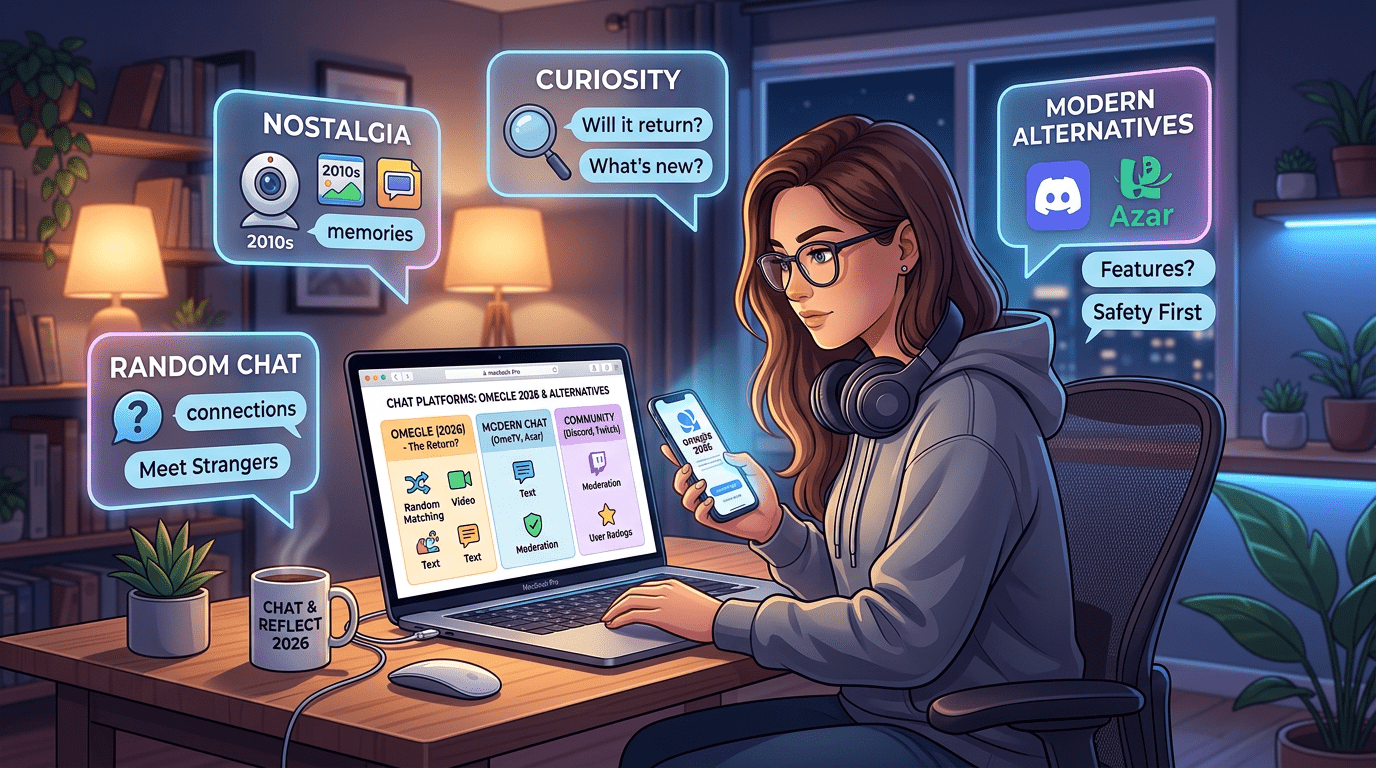
If you’re tracking this space closely, the next few signals matter more than the teaser itself.
- Whether Omegle opens waitlists, accounts, or app-style onboarding
- Whether the final product keeps random one-click matching at its core
- Whether the platform leans mainstream or adult-adjacent
- Whether mobile gets the same priority as desktop
- Whether relaunch hype turns into actual retention
The biggest story here isn’t just that Omegle might return. It’s that the return could redefine what the Omegle name means in 2026.
And if that happens, every platform in the category will have to reposition around it.
FAQ
Is Omegle fully back online in 2026?
Not yet. The official domain is showing a live teaser that says the platform is launching soon, but that is different from a full public relaunch.
Does the teaser confirm an exact launch date?
No. The page signals a return, but it doesn’t publicly lock in a specific launch date.
Will the new Omegle be the same as the old one?
Probably not. Based on the teaser language, the 2026 version looks more structured, more polished, and more focused on verification and moderation than the original.
Will users leave other random chat platforms if Omegle returns?
Some will test it immediately, but many users have already built new habits around niche platforms, adult chat funnels, mobile-first apps, and more specialized alternatives. That means attention may shift fast, but loyalty won’t automatically follow.
What does Omegle’s comeback mean for adult chat traffic?
It could pull some curiosity traffic back toward the original brand, but adult-intent users will still judge platforms on chemistry, speed, real-user ratio, and how well the experience matches what they actually came for.
Final Thoughts
Omegle’s 2026 return is real enough to take seriously, but not finished enough to romanticize.
The teaser confirms that the brand is moving again. That alone is big news. But the bigger story is what kind of platform comes back under that name. If it keeps the magic of random human connection while adapting to how the market changed, the relaunch could become one of the most watched returns in the entire chat space.
If it misses that balance, users will remember the name, click once, and go right back to the alternatives that already understand what the post-Omegle audience wants.
Either way, the era of pretending Omegle is just a dead brand is over.


